Boat interiors are exposed to constant stress from sun, moisture, and regular use. Over time, even well-maintained seating and panels begin to show wear. Reupholstering a boat is not only about visual improvement but also about restoring comfort, safety, and durability. Professionals who work with marine interiors often point out that timing and preparation play a major role in how successful an upholstery update will be.
Table of Contents
When Reupholstering a Boat Becomes Necessary
Many boat owners delay upholstery work until damage becomes obvious. However, waiting too long can lead to more complex and expensive repairs. Upholstery materials naturally degrade in marine conditions, even if the boat is not used daily.
Common signs that indicate it may be time to consider reupholstering include:
- Cracking or peeling surfaces caused by UV exposure
- Foam that feels compressed, uneven, or no longer supportive
- Seams that are splitting or pulling apart
- Persistent moisture odors that do not disappear after cleaning
- Visible discoloration or fading across seating areas
These issues often start small. As a result, early intervention helps preserve the underlying structure and prevents damage from spreading to seat bases or interior panels.
Comfort and Safety Considerations
Beyond appearance, upholstery directly affects comfort and onboard safety. Worn cushions can reduce proper seating posture, leading to fatigue during longer trips. Slippery or hardened surfaces may also increase the risk of movement or imbalance while the boat is underway.
Reupholstering a boat allows owners to reassess seating ergonomics and support levels. Updated foam density, improved surface grip, and better contouring can significantly enhance how the boat feels during use. Therefore, upholstery upgrades are often recommended when comfort complaints become consistent rather than occasional.
What to Evaluate Before Starting Upholstery Work
Before committing to reupholstery, it is important to evaluate the current condition of the interior. This helps determine whether a full replacement is needed or if targeted updates will be sufficient.
Key areas to assess include:
- Seat frames and backing surfaces for signs of rot or corrosion
- Foam condition beneath the upholstery material
- Areas exposed to the most sunlight or moisture
- Stitching and seam integrity across high-use zones
In many cases, surface damage may hide deeper structural issues. For this reason, professional inspection often reveals problems that are not visible at first glance.
Choosing the Right Materials for Marine Conditions
Material selection plays a critical role in how long new upholstery will last. Marine environments require fabrics and vinyls designed to resist moisture absorption, UV damage, and temperature fluctuations.
When planning reupholstering a boat, consider materials that offer:
- UV resistance to reduce fading and surface breakdown
- Mildew and moisture protection for humid conditions
- Easy-to-clean finishes for practical maintenance
- Breathable backing layers that reduce heat buildup
Additionally, foam selection is just as important as surface materials. High-quality marine foam maintains its shape longer and provides consistent support even with frequent use.
Installation Quality and Long-Term Performance
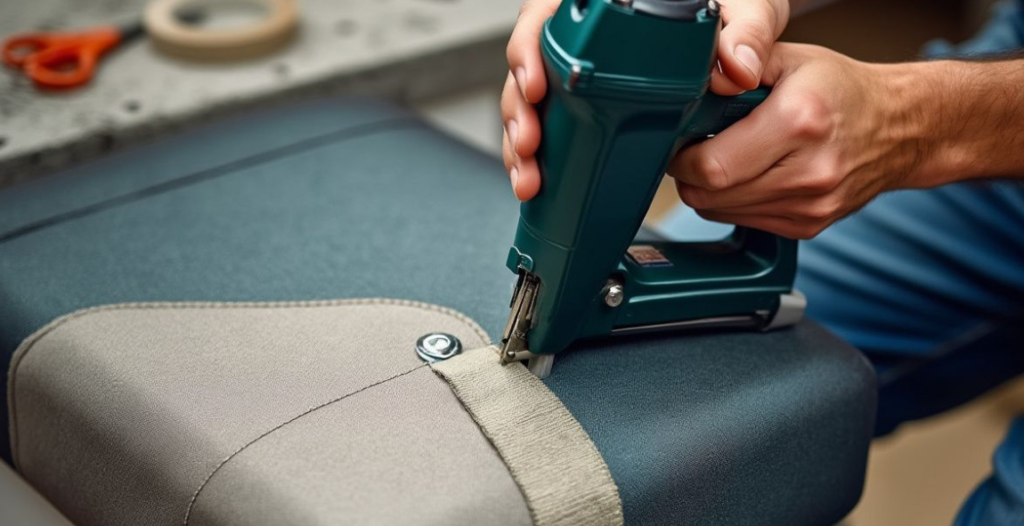
Even premium materials can fail if installation is not handled correctly. During reupholstering a boat, poor tensioning, incorrect adhesive use, or uneven backing surfaces can cause sagging or premature wear.
Professional upholstery installation typically focuses on layered construction. This includes stable backing, proper insulation where needed, and secure attachment methods. Modular approaches to reupholstering a boat are also becoming more common, allowing individual upholstery sections to be serviced or replaced without disturbing the surrounding interior.
As a result, installation quality directly influences how well the upholstery performs over time, especially in demanding marine environments.
Planning for Future Maintenance
Reupholstering a boat should be viewed as a long-term investment rather than a quick fix. Choosing materials and designs that support easier maintenance can extend the life of the interior and reduce future costs.
Simple planning choices can make a difference, such as selecting removable cushions, using moisture-resistant thread, and avoiding overly complex seam patterns in high-use areas. These details help keep the interior looking clean and functional for years.
Final Thoughts
Reupholstering a boat at the right time improves comfort, protects interior structures, and enhances overall usability. By recognizing early warning signs and paying close attention to materials and installation quality, boat owners can ensure their upholstery updates deliver lasting value and reliable performance.
You can find more details about marine upholstery expertise and services here.