Boat seating has to perform in an environment that constantly changes. Sunlight, water, humidity, salt, temperature, and regular passenger use can all affect the condition of an interior. For this reason, choosing a suitable boat upholstery material should be part of any serious seating upgrade. Boat Upholstery Broward provides professional upholstery for boats and yachts, helping owners create interiors that balance comfort, durability, and marine performance.
Different Boats Need Different Materials
Not every boat places the same demands on its upholstery.
A fishing boat may need surfaces that tolerate frequent cleaning, while a family cruiser may place greater emphasis on comfort. A center console operating offshore can require strong resistance to sunlight and saltwater.
Before selecting a boat upholstery material, owners should consider how they actually use their vessel.
Important factors include:
- Type of boat
- Typical boating location
- Frequency of use
- Exposure to sunlight
- Freshwater or saltwater operation
- Storage conditions
This simple assessment can prevent an unsuitable material choice.
Fishing Boats Need Easy-Care Seating
Fishing creates unique challenges for marine upholstery.
Water, bait, fish residue, equipment, and frequent movement can quickly make seating dirty. Owners often benefit from surfaces that allow quick cleaning and resist everyday wear.
Durable marine vinyl can be a practical option for these environments. Strong stitching and properly constructed cushions can further improve the lifespan of the seating.
For a frequently used fishing boat, a boat upholstery material should prioritize practical performance over delicate finishes.
Cruisers Put Comfort in Focus
Cruising boats often keep passengers seated for much longer periods.
Family trips, weekend cruises, and extended journeys can make cushion quality especially important. Even durable upholstery will not create a comfortable interior if the foam underneath has become compressed.
During an upgrade, owners should evaluate:
- Foam density
- Cushion thickness
- Seat depth
- Back support
- Cushion shape
A combination of supportive foam and a durable boat upholstery material can make long days onboard considerably more comfortable.
Center Consoles Face Strong Exposure
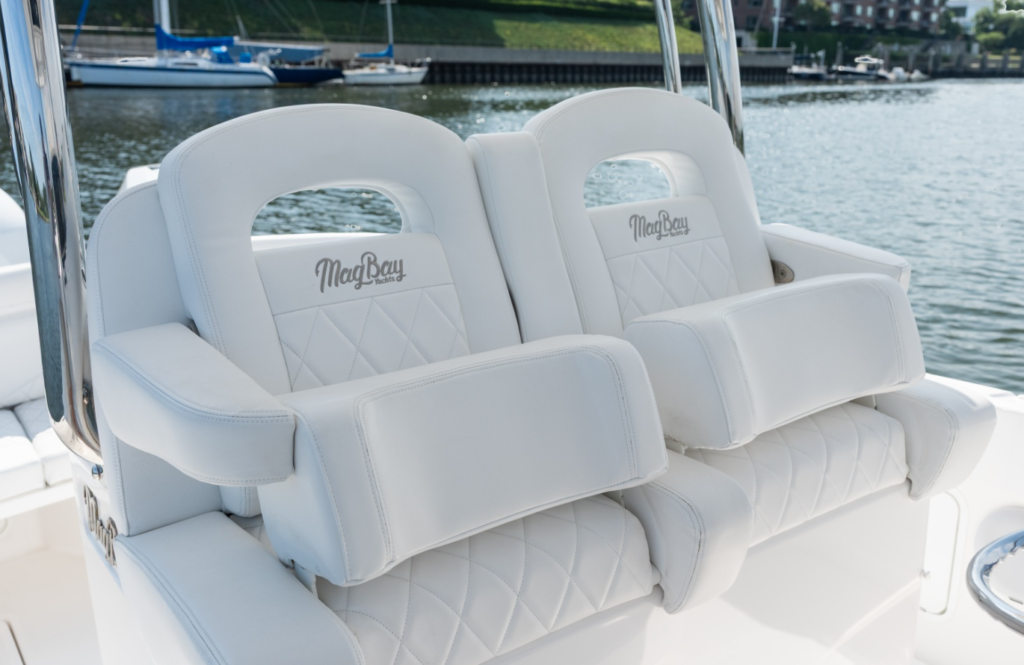
Center console boats often spend significant time in open conditions.
Helm seats, leaning posts, and cockpit cushions may receive direct sunlight throughout the day. Saltwater spray can add another layer of stress, particularly during offshore trips.
UV resistance should therefore be a major consideration when selecting a boat upholstery material for exposed seating.
Covers can also reduce unnecessary sunlight exposure when the boat remains at the dock.
Cabin Seating Has Different Priorities
Enclosed cabins provide more protection from direct weather exposure.
As a result, owners may have greater freedom to focus on textures, colors, and decorative details. However, humidity can still affect enclosed spaces, particularly when ventilation is limited.
Moisture-resistant materials remain important, even when seating is located inside the cabin.
The ideal boat upholstery material should fit both the visual style and environmental conditions of the space.
Material Color Can Affect Comfort
Color is not only a design decision.
Dark surfaces can absorb more heat when exposed to strong sunlight, while lighter shades generally create a brighter visual environment.
For open seating, owners may want to consider how a chosen color will feel after hours under direct sun.
Light gray, white, cream, and other neutral tones can create a cooler-looking and more open interior, while darker accents can provide contrast.
Texture Adds Character Without Sacrificing Function
Boat owners can introduce personality through texture rather than relying entirely on bold colors.
Subtle grain patterns, contrasting panels, and decorative stitching can make seating more visually interesting.
A practical boat upholstery material can therefore serve as both a protective surface and an important design element.
The strongest results usually come from combining a small number of complementary textures rather than using too many competing patterns.
Inspect the Foam Before Reupholstering
New material cannot solve every seating problem.
If the foam underneath has collapsed, changing only the exterior covering may provide limited improvement. Owners should inspect the entire cushion before beginning restoration.
Replacing deteriorated foam can restore:
- Cushion shape
- Passenger support
- Seating comfort
- Surface appearance
- Long-term resilience
This approach can make a new boat upholstery material installation perform much better.
Maintenance Starts After the Upgrade
Even high-quality marine materials need regular care.
After a trip, owners should remove salt and other contaminants before they remain on the surface. Wet cushions should dry fully, especially before storage.
A basic maintenance routine includes:
- Wiping seating after use
- Rinsing away salt residue
- Drying cushions thoroughly
- Cleaning spills quickly
- Checking seams
- Using fitted covers during storage
Regular care can help protect the boat upholstery material and extend the useful life of the seating.
When Should Seating Be Replaced?
Small imperfections do not always require complete replacement.
A loose seam, minor tear, or isolated damaged panel may only require a targeted repair. However, widespread cracking, severe fading, flattened foam, and repeated seam problems can indicate that a larger restoration makes more sense.
Replacing several components together can also create a more consistent appearance throughout the boat.
Final Thoughts
Choosing marine upholstery should begin with the boat itself. Fishing boats, cruisers, center consoles, and cabin vessels all place different demands on seating.
A suitable boat upholstery material can help protect against sunlight, moisture, salt, and everyday wear while providing the foundation for a comfortable and attractive interior. By considering the vessel’s environment, seating location, cushion construction, and maintenance requirements, owners can make smarter upholstery decisions and enjoy better seating for many seasons.
More interesting articles you can explore here.