Table of Contents
An upholstery boat seat upgrade can change the way a boat feels without requiring a major renovation. Seats experience constant contact with passengers, sunlight, moisture, and saltwater, making them one of the most heavily used parts of a marine interior. Over time, even well-built seating can lose its original comfort and appearance. Replacing worn coverings, damaged foam, or weakened stitching can restore the interior and make the vessel more enjoyable. If you are considering professional improvements, you can explore marine upholstery services here from Boat Upholstery Broward, a company specializing in boat and yacht upholstery.
Why Boat Seating Deserves Regular Attention
Boat seats do more than provide a place to sit.
They support passengers during cruising, fishing, entertaining, and relaxing. Because they remain in use throughout most trips, small defects can quickly become noticeable.
Cracked vinyl or loose seams may start as minor cosmetic problems. However, continued exposure to water and sunlight can cause the damage to spread. Regular inspections allow owners to identify problems before they affect larger areas of the interior.
Look Beyond the Visible Surface
When evaluating marine seating, it is important to inspect more than the outer covering.
The foam underneath can affect comfort and support just as much as the upholstery itself. Years of compression can make cushions uneven, while moisture may damage the internal material.
During an upholstery project, owners should consider:
- Foam condition
- Cushion shape
- Stitching strength
- Seat support
- Vinyl quality
- Moisture exposure
Addressing several of these elements at the same time can produce a more durable result.
Select Materials for the Marine Environment
Boat upholstery must withstand conditions that ordinary furniture rarely encounters. For this reason, choosing the right upholstery boat seat materials is essential for long-term comfort and durability.
Marine-grade vinyl and other specialized materials can provide better protection against UV exposure, moisture, and frequent cleaning. The right materials also make it easier to maintain the interior after long days on the water.
When selecting new upholstery, consider whether the material offers:
- Strong UV resistance
- Water resistance
- Easy maintenance
- Reliable color retention
- Resistance to mold and mildew
- Comfortable surface texture
Material quality can have a major impact on the lifespan of the finished seating and help keep an upholstery boat seat comfortable and attractive through many boating seasons.
Match the Design to the Boat
A successful restoration should complement the vessel rather than simply replace old materials.
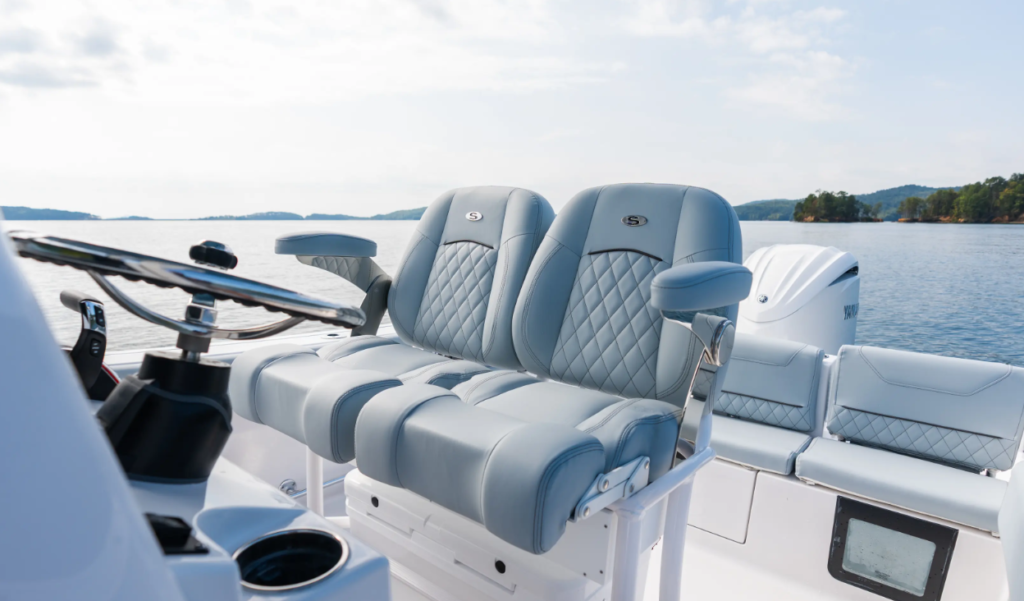
Owners can choose colors, textures, and stitching patterns that match the existing interior or create a completely updated appearance. Neutral tones can create a clean coastal look, while contrasting details can add a more distinctive character.
Popular design improvements include:
- Two-tone seating
- Decorative stitching
- Custom piping
- Textured vinyl
- Embroidered details
- Coordinated cushions
Even relatively small changes can make the interior feel significantly newer.
Comfort Should Guide the Restoration
A visually attractive seat is not necessarily a comfortable one.
Owners should think about how passengers actually use the boat. Someone who spends full days fishing may need firm support, while a family cruiser may benefit from softer cushioning and improved back support.
An upholstery boat seat project provides an opportunity to adjust these details. Better foam and improved contours can make longer trips easier and reduce discomfort during extended time on the water.
Protect the Interior Between Trips
Good maintenance begins after the restoration is complete.
Boat owners can protect their investment by cleaning an upholstery boat seat regularly and removing salt residue before it accumulates. Wet cushions should also dry completely to reduce the risk of unpleasant odors and moisture-related problems.
Useful habits include:
- Wiping seats after every trip
- Rinsing away salt when needed
- Drying cushions thoroughly
- Inspecting seams regularly
- Keeping sharp objects away from seating
- Covering the interior during storage
Consistent care can help new upholstery boat seat materials maintain their appearance, comfort, and durability for much longer.
Repairs Can Sometimes Prevent Larger Costs
Not every damaged seat requires complete replacement.
A small seam failure or localized tear may be repairable before it affects surrounding materials. Addressing these problems early can prevent water from reaching the foam and causing additional deterioration.
However, widespread cracking, severe fading, or collapsed foam may indicate that restoration offers better long-term value than repeated small repairs.
A Fresh Interior Can Extend the Life of a Boat
A well-maintained interior contributes to the overall condition of a vessel.
When seating remains comfortable and attractive, owners can enjoy their boats with greater confidence. A refreshed interior can also improve the presentation of a vessel if the owner eventually decides to sell.
For this reason, an upholstery boat seat upgrade can be both a practical improvement and a long-term investment in the boat.
Conclusion
Boat seating faces constant challenges, but smart restoration and regular care can make a significant difference. Quality marine materials, supportive foam, durable stitching, and a suitable design can transform worn seating into a comfortable and reliable part of the interior.
Whether the goal is better comfort, a fresh appearance, or improved durability, an upholstery boat seat project can help prepare a vessel for many more enjoyable days on the water.
More interesting articles you can explore here.